Exploring the Dark Realms of Lovecraft Country

moviescout.org – “Lovecraft Country” is a critically acclaimed HBO series that combines elements of horror, science fiction, and historical drama. Adapted from the 2016 novel by Matt Ruff, the series delves into the segregated United States of the 1950s, weaving a narrative that explores themes of racism, family, and the supernatural. This article will provide an overview of the series, its plot, and its significance in the context of modern television.

Plot Overview

“Lovecraft Country” follows the journey of Atticus Freeman, a young black man who embarks on a road trip across the United States in search of his missing father. Accompanied by his friend Letitia and his uncle George, Atticus navigates a world fraught with danger, both from the racial prejudices of the time and from the malevolent forces that lurk in the shadows.

The series is set against the backdrop of the Jim Crow era, where racial segregation and violence are rampant. As the characters travel through various towns and cities, they encounter a series of bizarre and terrifying events that are rooted in the mythology of H.P. Lovecraft. The narrative is a blend of historical fiction and cosmic horror, with the characters facing not only the horrors of racism but also the ancient, eldritch beings that Lovecraft made famous.

Themes and Significance

Racism and Segregation

One of the most prominent themes in “Lovecraft Country” is the pervasive racism and segregation of the 1950s. The series does not shy away from depicting the harsh realities of this period, including the violence and discrimination faced by African Americans. By intertwining these historical elements with supernatural horror, the show creates a powerful commentary on the real-world horrors that were (and still are) faced by marginalized communities.

Family and Identity

The series also explores the theme of family and identity. Atticus’s quest to find his father is not just a physical journey but also a metaphorical one, as he grapples with his own identity and the legacy of his family. The relationships between the characters are complex and multifaceted, adding depth to the narrative and making the audience invest in their struggles.

Cosmic Horror

“Lovecraft Country” draws heavily from the cosmic horror genre, popularized by H.P. Lovecraft. The series incorporates elements of Lovecraft’s mythology, including ancient deities and eldritch abominations, to create a sense of existential dread. This blend of historical and supernatural elements is a unique aspect of the show, setting it apart from other period dramas.

Critical Reception

“Lovecraft Country” has received widespread critical acclaim for its bold storytelling, strong performances, and its ability to tackle difficult subjects with nuance and sensitivity. The series has been praised for its innovative approach to blending different genres and for its unflinching portrayal of the horrors of racism.

Conclusion

“Lovecraft Country” is a groundbreaking series that pushes the boundaries of what can be achieved in television. By combining historical drama with cosmic horror, the show offers a fresh perspective on both genres. Its exploration of racism, family, and identity makes it a significant work in the context of modern television, and its critical success is a testament to its powerful storytelling and relevance.
Dangerous Countries Exposed: The Anatomy of Anarchy

moviescout.org – In a world where stability and order are often taken for granted, there exist pockets of chaos where anarchy reigns. These are places where the fabric of society has frayed, leading to a breakdown in law and order, governance, and sometimes even basic human rights. This article delves into the anatomy of anarchy, exploring the characteristics and consequences of such dangerous environments, and shedding light on countries that have, at various times, found themselves in the grip of disorder.

The Characteristics of Anarchy:
Anarchy, in its purest form, is a state of disorder due to the absence or non-recognition of authority. It is characterized by a lack of a functioning government, widespread violence, and the collapse of social structures. In such environments, the rule of law is replaced by the rule of the gun, and survival often depends on one’s ability to navigate a treacherous landscape.

  1. Collapse of Government:
    The most visible sign of anarchy is the collapse of government institutions. This can be due to civil war, revolution, or external invasion. Without a functioning government, essential services such as healthcare, education, and infrastructure maintenance cease, leading to a rapid decline in living conditions.
  2. Widespread Violence:
    Anarchy is synonymous with violence. When the state can no longer maintain a monopoly on the use of force, various factions emerge, each vying for power and control. This leads to widespread conflict, with civilians often caught in the crossfire.
  3. Breakdown of Social Order:
    In the absence of law enforcement and judicial systems, social order breaks down. Crime rates soar, and basic norms of society are ignored. This can lead to a Hobbesian state of nature, where life is “solitary, poor, nasty, brutish, and short.”
  4. Economic Collapse:
    Anarchy often leads to economic collapse. With no government to regulate trade, provide security, or maintain infrastructure, economies can grind to a halt. This exacerbates the suffering of the population, leading to famine, disease, and despair.

Dangerous Countries Exposed:
While anarchy can occur anywhere, certain countries have, at times, been particularly affected. It is important to note that the situation in these countries can change, and the following examples are based on historical contexts.

  1. Somalia:
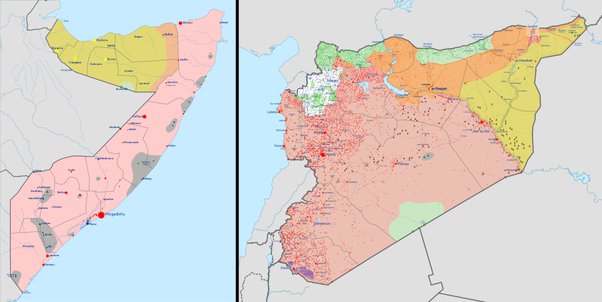
    For decades, Somalia has been synonymous with anarchy. Since the collapse of its central government in 1991, the country has been wracked by civil war, with various factions and warlords battling for control. Piracy, terrorism, and famine have become hallmarks of life in Somalia.
  2. Syria:
    Since the outbreak of the Syrian Civil War in 2011, the country has descended into chaos. The Assad regime’s brutal crackdown on protesters led to a full-scale conflict, with numerous factions, including ISIS, fighting for control. Millions of Syrians have been displaced, and the country’s infrastructure has been devastated.
  3. Yemen:
    Yemen has been on the brink of anarchy due to a combination of civil war, a Saudi-led intervention, and the rise of the Houthi rebels. The conflict has led to a humanitarian crisis, with widespread famine and disease affecting the population.
  4. Afghanistan:
    After the fall of the Taliban in 2001, Afghanistan struggled to establish a stable government. The withdrawal of international forces in 2021 and the subsequent Taliban takeover have once again plunged the country into uncertainty and potential anarchy.

Conclusion:
The anatomy of anarchy reveals a complex interplay of factors that can lead to the collapse of societal order. While the countries mentioned above have, at different times, experienced the harsh realities of anarchy, it is crucial to understand that these conditions are not permanent. International intervention, peace processes, and the resilience of local populations can and have led to the restoration of order. However, the scars of anarchy run deep, and the road to recovery is often long and fraught with challenges. As the world watches these dangerous countries, it is important to remember that behind the statistics and headlines are real people whose lives are indelibly marked by the chaos of anarchy.